

This article is Part 6, the final piece of an interactive series of articles that are designed to help you effectively understand and navigate your health, while also gently dismantling outdated beliefs.
This article is about what I see as the final piece of the obstacle puzzle to vibrant health: diet culture.
If you missed them, here are parts 1-5:


This is not medical advice. This information is for educational purposes.
Please consider supporting my book habit by becoming a paid subscriber! I’ll read ‘em so you don’t have to. Only $2.75 per month!! (if you pay yearly)
The Magical Thinking of Dieting
Like any good nutritionist I stumbled my way into the health-o-sphere by experimenting with popular diets, hoping to find the one that would magically unlock my greatest potential. But instead of miraculous healing I found myself with gut issues, subclinical hypothyroidism, anxiety, depression, lack of appetite along with serious bloating, nausea and cramping with every meal. The perfectionist in me—fed by the strict rules that go along with dieting —felt both fulfilled and not good enough with my many diet failures.
I wasn’t ever one to diet in order to lose weight, but rather I was dieting in order to create a higher quality of life for myself. Which I thought would come to me through reading books written by experts, nutritionists and researchers who specialize in healing diets. But after reading dozens of books about various healing diets I felt no more ready to tackle my health issues than before I had this knowledge. In some ways, I felt even less equipped to tackle my mounting health issues.
I was doing my best to steer clear of fad diets and to focus on the truly healing diets with remarkable results. Y’know like, Paleo, Whole30, Atkins, Keto, Carnivore, The Perfect Health Diet, GAPS, and the so-called Mediterranean Diet. But even these weren’t getting me anywhere. And many of them contradicted each other. I thought I was working towards crafting a perfect diet for myself, but instead it seemed like I was learning about the various religions of the nutrition world. Each as dogmatic as the last. Each preaching the One-way doctrine of healing. Each missing the mark for most people.
How strange. Many people seem to be genuinely helped by these diets and yet an equal amount of people seem not to be helped by them, and often even further harmed by these diets. But each diet book brought with it the science behind the lists of acceptable and unacceptable foods. Each book described why and how this particular diet is the most healing diet. I could see how it would be easy to get all wrapped up in a diet ideology and take it on as your personal healing doctrine because the science is there!
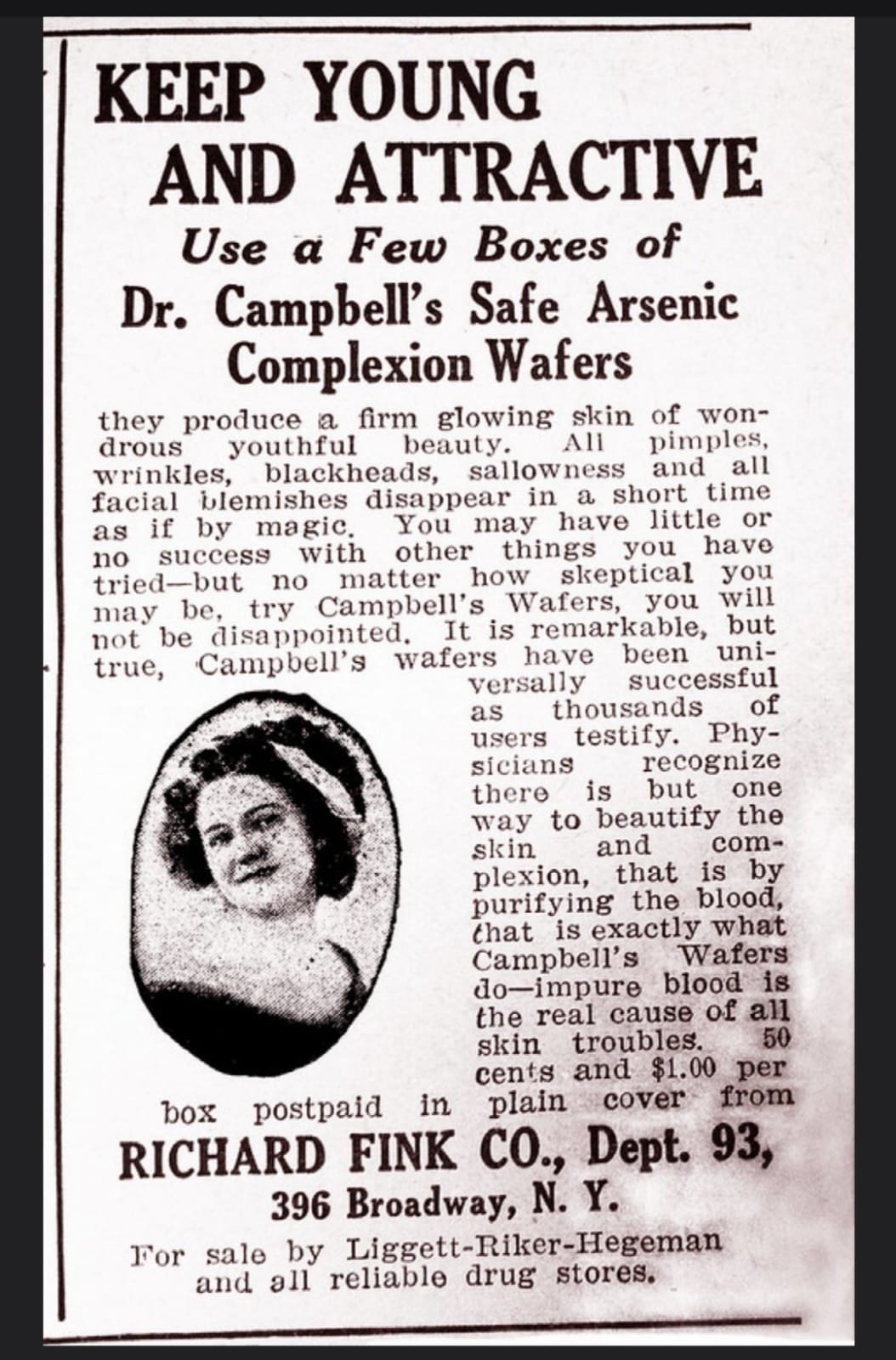
But there were a few things that never sat right with me about diets:
Dieting breeds an unhealthy relationship with food.
Dieting is a modern invention of capitalism centered on scarcity, there is no unindustrialized culture that chooses to reduce calories in order to obtain an aesthetic body type.
Dieting leads to black and white thinking and difficult to meet expectations.
Dieting trains you to view both foods and your body as the enemy.
It trains you to focus on what you want to change rather than how you can better support yourself.
Most dietary research has been done on men’s bodies, because women are very difficult to study.
Diets are a distraction. They pull you out of your body and force you to ignore yourself to get through them.
Diets are someone else’s understanding of how a human body should work, but they don’t take into account how different every BODY is. Not because they’re lazy, or inept, but because it’s impossible!
Diets are the learned habit of denial of self, which is only a virtue if you are an orthodox christian… I jest.
Food is meant to nourish you, to help you to build up your body, to support your detox pathways and to heal you from within. No food is good or bad in its own right. Food is not a moral choice. We may live in a militant society obsessed with power and control, but your body is not a battlefield!! No matter how many people compare it to one.
And with what we know about bioindividuality, hormone cycles, and the difference between male and female bodily needs, we know that a diet designed for a man is likely to be unhelpful to a woman, at best or harmful, at worst— especially when started young, or carried out during peak fertility years. Women aren’t just tiny men. We have our own dietary needs and have the ability to create life from our own body, meaning our nutrition and energy needs can be at times, greater than that of a man.
There is an endless array of possibilities in how different bodies will respond to any given stimulation, or substance. Nutrition science provides us some cues, sure, but everyone’s brains are so different that these cues may read differently depending on whose brain is doing the processing.
Your body is a living organism that willingly houses other living organisms in symbiotic relationships, and in some cases even creates other living organisms inside of it. So anything that has potential to sever or disrupt this relationship should be highly suspect to us.
The way I see it, you’re here doing this work so that you can stop being jerked to and fro by diet culture. Because even the diets that have been designed by well-meaning well-respected professionals from all sorts of backgrounds— even the diets designed by professionals I respect— don’t work because the ideology behind them is faulty.
The Mental Health—> Nutrition Connection
Since your brain and your body are intimately connected to each other and no one else, you should learn to listen to them— not other people. Right? Of course, you could live your whole life following diet protocol after diet protocol, and many people do; but if you were to do that you would be relinquishing your sovereignty while also teaching yourself how untrustworthy you are through continuous reinforcement. And if you can’t trust yourself, then who can you trust? This is how tightly intertwined diet and mental health is.
In today’s culture we are taught to use force (which I've written about here), rather than patience, understanding, and love to change [ourselves + others]. In life, this shows up mainly as denial of feelings, rejection, or hatred of your true self. Or it may come in the form of careful grooming, weight-watching and verbal bullying. You may even find yourself creating consequences for yourself if you “fail” or “slip-up.” The way you treat yourself is the way you diet.
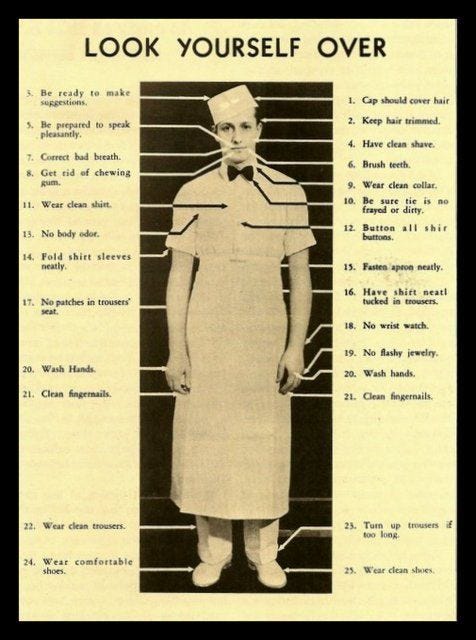
You might’ve been trained, as many are, from a young age to wish you were thinner, more muscular, had bigger breasts, or butt, smaller feet or a tiny, button nose. You might’ve been taught that there is a perfect look out there that is obtainable through massive amounts of control, restriction and consumerism. You might’ve been fed the lie that you can buy your way to beauty. You might’ve been taught that the ways that your body shifts over time should be hated, feared, and dreaded. That your value is in your aesthetics, and your body needs to be visually appealing at all times. I’ve written more about the pressure women face to maintain youthful aesthetics and the cost of rejecting your body’s natural transformations here.
These teachings are what diet culture thrives on. But diet culture also thrives on a more insidious aspect of the human experience— “Wellness” (as a proper noun, not a verb). Wellness that has been made into a lucrative industry promising rest, relaxation, inner peace, and perfect health once you arrive; which is ever on the horizon as long as you spend thousands of dollars on supplements, skincare routines, “superfoods” and fitness coaches.
Diet and Wellness are two sides of the same coin.
I’m not sure which I detest more, because both prey on individuals who need help, and are stumbling their way into what it means to take care of themselves; but Wellness seems to go after the people who also feel sick, who feel unwell, who are in dis-ease. Wellness promises healing and rejuvenation without the real work. The Wellness Industry says, “You can’t be whole on your own.” Just as diet culture says “You will only find health through restriction, bullying and destroying your relationship to food.”
Ironic, perhaps coming from a person who calls herself a Holistic Wellness Coach. But life is full of irony. While I may eventually suggest supplements and perhaps even sign up as an affiliate for the ones I recommend often, I hope that what I am offering more of than anything is support and guidance on accessing your own critical thinking and revisiting your unhelpful patterns. I believe you can heal without ever taking a supplement, or buying a sauna, or getting an acupressure mat, or buying an air filter, or even hiring a coach. I did. I believe that your body has everything it needs when you learn to live life like a human again.
Does that mean that I believe you can heal without investing in yourself and your health? No. Does that mean that I believe outside support and purchasable tools are useless or wrong to use? No!
But what if instead of implementing restrictive health regimens we focused on creating rituals?
If you want a more in-depth look at the difference between rituals and routines read this:

The Take Away
You’ll never find your perfect health through a diet, because eventually every diet will land you in a nutrient deficient state— even strict carnivore— unless you are carefully counting, calculating and composing your meals like a chemist, or taking supplements to fill in the gaps. But does that really sound like living to you? Be honest. I simply can’t buy into the belief that life needs to be this tightly regimented.
Remember, there are no “good or bad” foods. Everything has a time, a place, and a season, just ask Ecclesiastes. Even still there are foods that are nutrient dense, life-sustaining golden nuggets of delectable perfection, and there are survival foods. The survival foods are not “bad,” in fact, they have no morality whatsoever. They are simply not meant to sustain us for very long on their own, and may cause issues if they are relied on too heavily.
Diet Culture says, “Eat This, But Not This.” It creates Rules, Structure, and Rigidity.
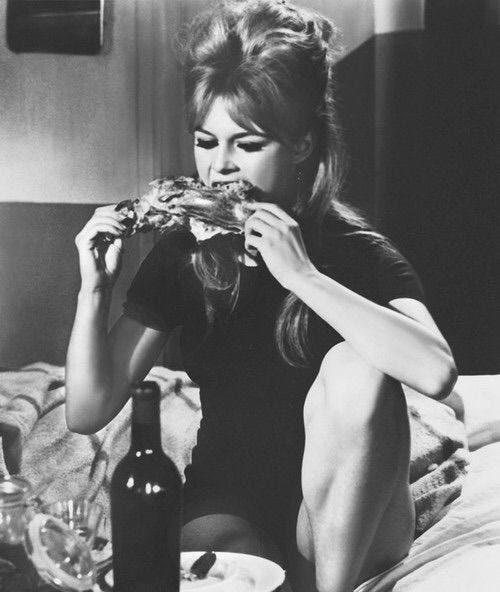
Structure can be very helpful, but rules and rigidity have no place in a mammalian diet. Have you ever seen a cow say, “Nah, better not, I’m watching my weight.”? Of course not! [nor any other animal for that matter] This is a uniquely human issue. And it makes sense since we are the mammals who are the most removed from our natural environments— at some point it was bound to get confusing to be this far from nature.
Instead of rules, what if you simply ate foods that made you feel strong, energized, and satisfied? What if you trusted your body to tell you what it needs, instead of asking ’the experts’?
If you need inspiration on what that looks like, you can read about my journey from health perfectionism to intuitive eating:

Are You In The Habit Of Dieting?
If So These Questions Are For You:
I INVITE YOU TO SET ASIDE 1-2 HOURS TO ANSWER THESE QUESTIONS, FULLY + HONESTLY.
Why do you feel the need to diet?
What are you trying to accomplish through dieting?
What are your beliefs about your body?
Do you believe that your body is here to serve you, take care of you, and keep you alive?
Do you believe that your body is against you, trying to attack you, or is angry at you? [These are all things I believed at one time, no shame here.]
Can you tell when your body becomes disregulated? What are some of the cues?
How do you feel when you are forced into something?
How do you feel when you are invited into something?
Do you like it better when you are told what to do, or when you are offered the chance to understand what to do and how to do it? Please elaborate on your choice.
When it comes to your body, do you understand your needs easily? If not, what do you feel blocks you from accessing your needs?
When you’re on a diet how do you react to your cravings?
How do you think this reaction affects your future relationship with food?
What do you think would be a healthier way to deal with your cravings?

👏🏻 Thank you!
This made me pause and think in the best way. Thank you for writing it ♡ we would love to have you with us at gēnu if you are interested! Looking forward to reading more from you.